
Autumn Garden Jobs
Autumn garden jobs are often underestimated by non-gardeners. Many assume that once summer fades, the gardener’s to-do list winds down too. In reality, autumn is one of the most critical seasons for laying the foundations of next year’s success. The tasks you carry out now, cleaning, planting, protecting and planning, can make all the difference when growth resumes in spring.
In this post, I’ll walk you through practical autumn jobs for your lawn, borders, bulbs, wildlife and structures. Whether your plot is large or small, formal or wild, tackling these jobs will help your garden recover from summer stress, build resilience over the winter and emerge stronger when the warmer days return.
As you can see, there is still a lot of colour in my garden. Once the first frost hits, a lot of mine will go, such as the cosmos and the dahlias, but there will still be a lot of colour and structural interest once the summer colour is gone.
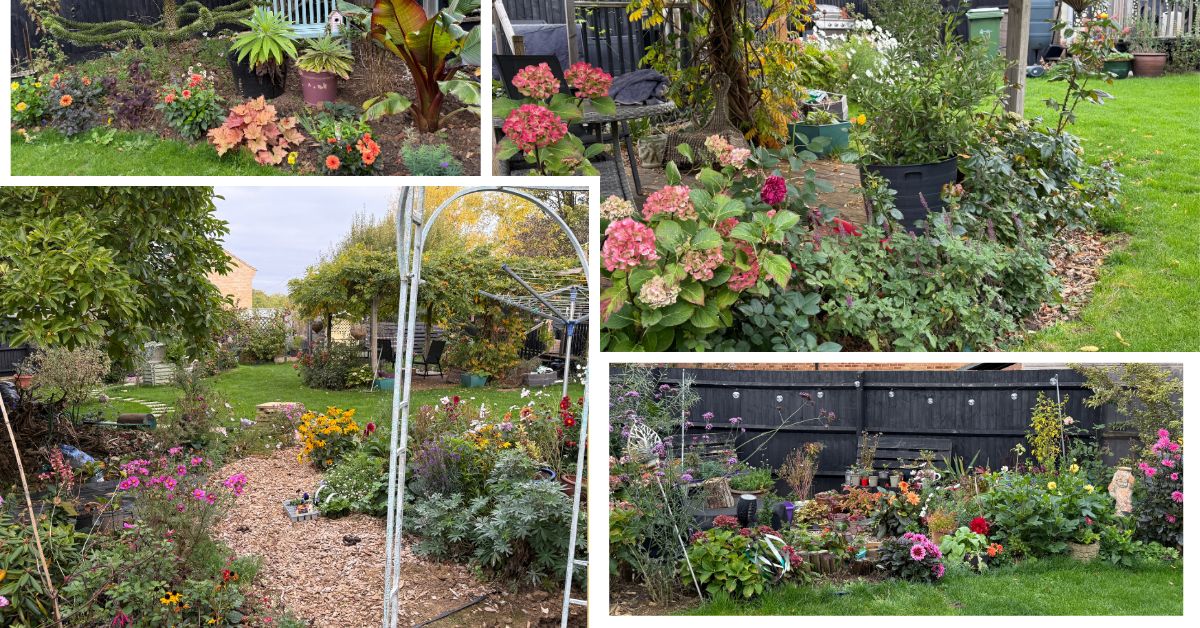
1. Lawn Care & Turf Maintenance
Your lawn is often the first thing people notice, and one of the first to suffer in autumn. Summer’s heat, droughts and heavy use can leave patches, compacted soil and embedded thatch.
Tasks:
- Scarify or rake: Use a spring-tined rake or manual scarifier to remove moss, dead grass and thatch. This opens the turf and prevents moisture being trapped.
- Aerate: Use a fork or hollow-tine tool to relieve compaction. In wetter soil, wait for a drier spell before you dig.
- Overseed bare spots: Mix grass seed with topsoil or compost, press into the bare area and water gently.
- Apply autumn lawn feed: Choose a feed higher in potassium to strengthen roots for winter rather than encouraging top growth. Although with the lack of rain in recent times, I personally wouldn’t feed your lawn, unless you are going to water regularly; otherwise, it could burn the grass you do have.
- Leaf clearing and mowing: Regularly rake fallen leaves so they don’t smother the turf. Do a final mow before the frost hits, raising the blade slightly if needed.
Scarifying and overseeding are probably a bit late now. If you have done this already, then great, but if now, I would now wait till Spring.
2. Weeding, Mulching & Leaf Management
Weeds continue to grow well into autumn, and leaves begin their fall. Both are opportunities to give your soil and plants a better environment.
Tasks:
- Weeding: Pull weeds before they set seed, especially in beds, gaps and borders. The fewer you leave now, the less work you’ll face in spring.
- Apply mulch: Add a good layer of organic mulch, bark chips, compost or shredded leaves around perennials and shrubs. This suppresses new weeds, retains moisture, moderates soil temperature and gradually adds nutrients.
- Leaf management: Shred leaves for mulch, bag them for leaf mould, or compost them. Leave some areas lightly covered to provide refuge for overwintering wildlife.
- Don’t over-tidy: Leaving some seedheads, stems or grasses helps wildlife and adds winter structure and interest.
3. Seed Collection & Autumn Sowing
Autumn is a wonderful time to harvest seed and even sow some plants for next spring.
Tasks:
- Collect seed: Harvest dry seedheads when fully mature. Store in paper envelopes or jars in a cool, dry place.
- Clean and dry: Let seedheads dry fully before separating the seed.
- Sow hardy annuals: Plants like wallflowers, sweet William and yellow rattle can be sown now. They’ll root over winter and flower earlier in spring.
4. Bulbs, Planting & Dividing
Now is the prime time to set the foundations for spring colour and healthy plants.
Tasks:
- Plant spring bulbs: Daffodils, crocuses, alliums and anemones can be planted now at two to three times their depth.
- Wait for tulips: Hold off until November when colder weather reduces the risk of disease.
- Divide perennials: Lift and divide large or tired clumps to refresh growth and fill gaps.
- Plant shrubs, trees and climbers: Autumn moisture helps roots establish before spring.
- Fill borders with biennials: Plant foxgloves, wallflowers or sweet rocket into flowering positions now.
5. Pruning, Cutting Back & Structural Work
Autumn is a good time to tidy and maintain the structure of your garden.
Tasks:
- Prune hedges and shrubs: Trim deciduous hedges and remove weak or crossing branches after leaf fall but before frost.
- Cut back selectively: Remove dead or diseased growth, but leave some seedheads and stems for wildlife and winter interest.
- Check supports: Replace worn ties, stakes and canes.
- Tidy structures: Wash greenhouse panes, clear gutters and repair cold frames.
6. Tool Care, Greenhouse & Outdoor Structures
It’s essential to prepare your tools and garden equipment for winter.
Tasks:
- Clean, sharpen and oil tools to prevent rust and damage.
- Wash pots and containers with disinfectant and store them dry.
- Prepare the greenhouse: Clear spent plants, wash panes, insulate with bubble wrap or fleece.
- Check fences and sheds: Repair, reseal or reinforce where needed.
7. Wildlife, Habitat & Winter Interest
A garden is more than plants, it’s an ecosystem. Autumn is the perfect time to encourage biodiversity.
Tasks:
- Create refuges: Log piles, twig bundles, leaf litter and bug hotels give insects and small animals shelter.
- Provide food and water: Fill feeders, refresh bird baths and check for ice.
- Leave seedheads and grasses for birds and winter structure.
- Clean nest boxes to remove old nesting material and pests.
8. Reflection, Planning & Visual Records
Now is also the time to look back on the growing season and plan for next year.
- Take reference photos of beds and borders while they’re bare.
- Keep a garden journal to record what thrived and what failed.
- Make a wishlist for plants or features you’d like to add.
- Hunt for bargains on clearance tables, many plants recover beautifully with repotting and care.
Conclusion
Autumn is a transitional season, but with the right tasks it becomes an opportunity. When you scarify your lawn, plant bulbs, tidy borders and nurture wildlife, you’re not just keeping your garden ticking over, you’re laying the groundwork for a vibrant space next year.
Pick three jobs from this list to start today. Share your progress with photos or your own checklist, and watch how your efforts pay off in spring.